Treading into fruit pastille territory…

I turned vegetarian when I was 9 years old, (yes, you read that right, 9)! As a child, giving up many of my favourite sweets and cakes was definitely the hardest part. Fruit pastilles and Cadbury’s Swiss Gateaux Cake, they all had to go.

So, it isn’t without a certain amount of trepidation that I use gelatine in the studio, however, when a document requiring repair contains writing in iron gall ink, needs must.

Introducing moisture into a repair, such as happens when using Japanese wheat starch paste or methyl cellulose, (two commonly used adhesives in conservation), can be extremely detrimental for the ink, causing it to deteriorate more rapidly and spreading the effects to the surrounding otherwise healthy paper.

Gelatine not only reduces the amount of moisture but it actually helps to prevent the spread of the detrimental iron ions, the culprits for spreading the damage. I use a method where the heated gelatin is left to set and when cool, it is sieved several times to a workable texture. The repairs not only physically stabilise the paper but it’s great to know that any potential damage to the ink has been avoided.

For more information on iron gall ink, take a look at an article on the front page of my April 2013 newsletter.

Posted in From the studio | Leave a comment

Tynemouth Antiquarian and Second Hand Book Fair

Polly Bird, a local bookbinder, and I had a great day yesterday sharing our stall at Tynemouth station for the Antiquarian and Second Hand book fair.

Meeting lots of current and previous clients as well as catching up with the many book stall owners always turns into a great social occasion as well as a work one.

It was a chilly day though, I hope the next event on June 23rd is a lot warmer!

Zoe and Polly at Tynemouth, bundled up against the cold!

Zoe and Polly at Tynemouth, bundled up against the cold!

Posted in Book fairs | Leave a comment

Latest Newsletter- now available

The latest newsletter from Zoe Finlay Paper Conservation is now available either by clicking the below link or by accessing via my ‘Newsletter’ page, where archived issues can be found; Newsletter – April 2013

This seventh issue focuses on illuminated manuscripts as well as an article about iron gall ink, the presence and preservation of which is integral to an understanding of our history.

If you’d like to be added to future newsletter email lists and be sent the quarterly issues direct to your inbox, please email me at zoe.finlay@gmail.com.  Your details will never be passed to anyone else.

Posted in Media articles of interest | 1 Comment

Libraries through the Ages

“Libraries are the means by which the present learns from the past, and leaves its own intellectual legacy to the future. We are the heirs of five thousand years of learning…”

Libraries through the Ages, Fred Lerner, (1999) Continuum Publishing Company, New York, p12

I’ve just reached the end of this great book which I can highly recommend. Whilst I already had some knowledge on the evolution of libraries, the book has somehow linked up those isolated fragments and in its seamless, well-written presentation of the history of the library, it has answered many questions for me and taught me a great deal of new facts.

For me, it was also permeated with a romance with its tales of distant lands, forgotten eras, dynasties and architectural and intellectual wonders which as hard I as I tried I still struggled to visualise.

Ironically, I initially borrowed the book from my local library however as I know it will be a book I will want to return to in the future, I’ve since bought my own copy. An invaluable book that I hope you will also enjoy.

Posted in Media articles of interest | Leave a comment

Lindisfarne Gospels; a brief introduction

For those reading this blog who are based in the North East and planning to visit the Lindisfarne Gospels in Durham shortly, you may be interested in this British Library brief explanation of the illuminated manuscript which I’ve just found courtesy of local bookseller, Cardmons‘ website:

http://britishlibrary.typepad.co.uk/digitisedmanuscripts/2011/01/anglo-saxon-treasures-online.html

Posted in Paper history | Leave a comment

8th Hexham Book Festival; on now!

Wow, what a great line up for the 8th Hexham Book Festival, I’m really impressed. It kicked off on Wednesday 27th March and ends with Dan Snow on Friday 21st June, (*blush*)!

Alistair Moffat, Andy Kershaw, Lionel Shriver, Michal Frayn, Clare Tomalin…if you haven’t already seen the line up, take a look here:

http://www.hexhambookfestival.co.uk/programme

Just leave me one ticket for Dan, please.

Posted in Events, talks and activities | Leave a comment

Latest Newsletter…almost there!

My latest newsletter is almost ready and will be available on the ‘Newsletter’ page of this site on Friday 26th April.

If you would like to subscribe to the mailing list, please email me at zoe.finlay@gmail.com

Thank you

Posted in Media articles of interest | Leave a comment

Exhibition; Society of Antiquaries, Newcastle, Great North Museum

If you haven’t yet visited the ‘Tales of Antiquarian Adventure, 1813-2013’  exhibition at the Great North Museum, Newcastle, you still have a few weeks to go before it closes on the 30th April. 

This is a really good exhibition, beautifully presented and well worth a visit to see the variety of artifacts collected by these Newcastle visionaries.

Without the formation of this group in 1813 over a few pints in the Turks Head, we would no longer have the city’s Castle Keep and there would be a gaping hole of a quarry in the middle of Hadrian’s wall, to mention just a few of the narrowly averted atrocities.

A personal favourite of mine was the map of Newcastle’s fortifications, painted on silk in 1638. Other treasures are on loan to museums in Oxford and London. Hopefully we’ll see more of this collection displayed in the future.

Posted in Events, talks and activities | 1 Comment

Preservation of papermaking traditions

I recently came across this article, http://usa.chinadaily.com.cn/china/2013-04/02/content_16370200.htm, which reports on an award given for the preservation of intangible heritage in China. Intangible heritage includes traditions which are passed from generation to generation, such as a skill, songs, rituals or storytelling. In this article, the award was for the preservation of paper making and paper conservation methods, of which many of the methods and the papers themselves have been adopted by Western paper conservators.

This is by far not the first time that China’s ancient papermaking traditions have been recognised and supported. Some paper makers in China, (and Japan) are themselves identified as national living treasures and their skills are recorded on film and in interviews. It is important that this recognition continues; intangible heritage is as deserved of conservation and preservation as is the heritage which we can hold and touch.

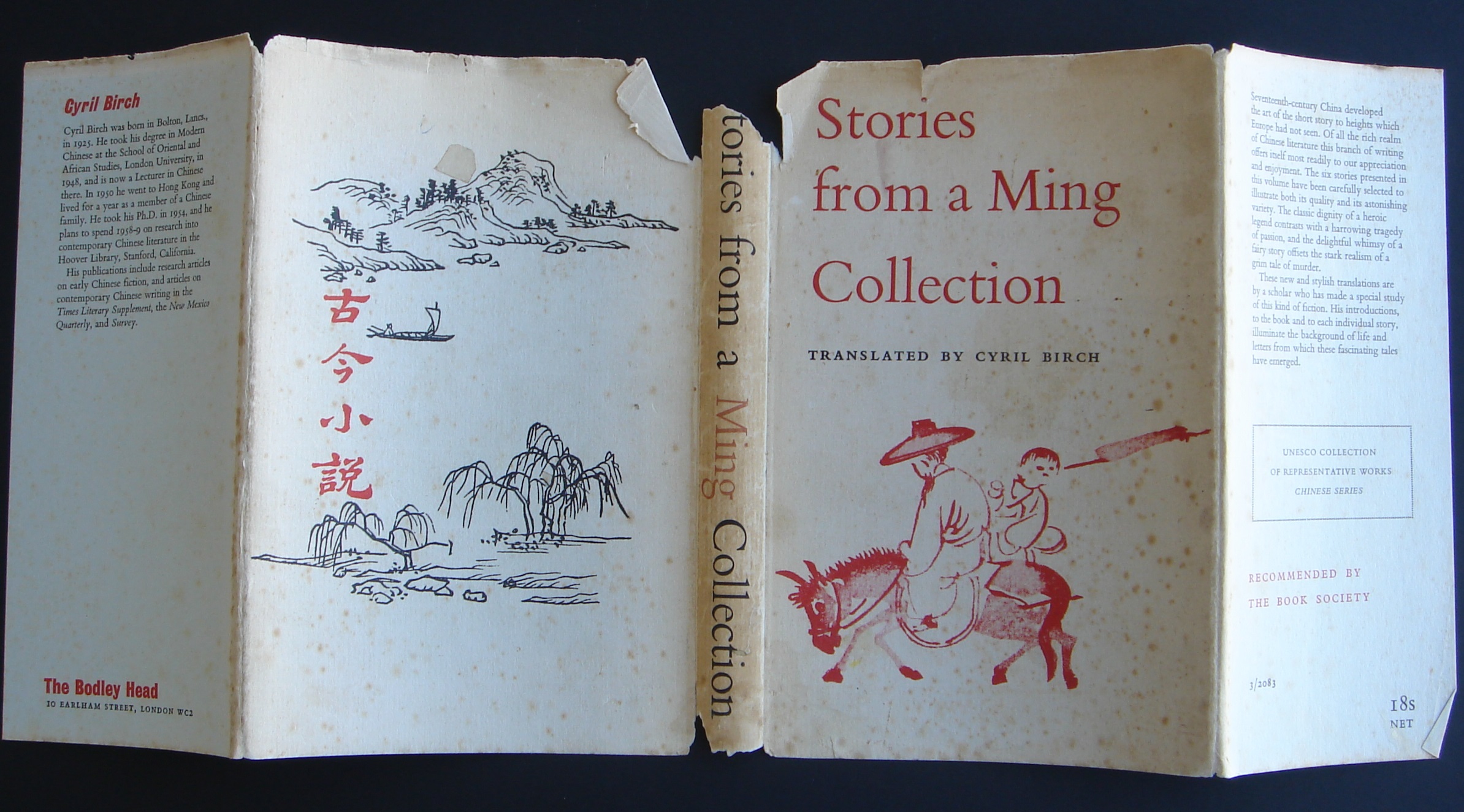
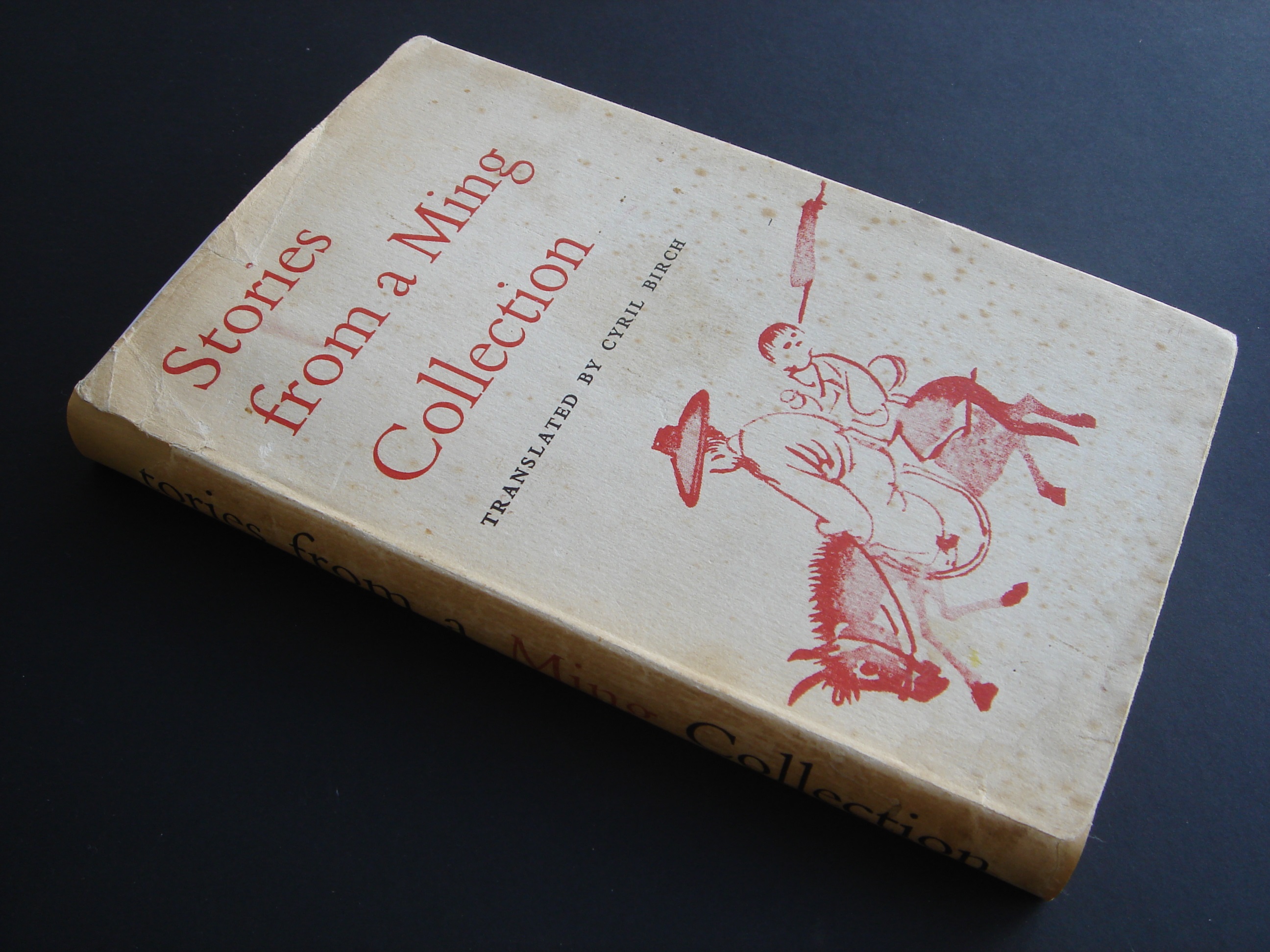
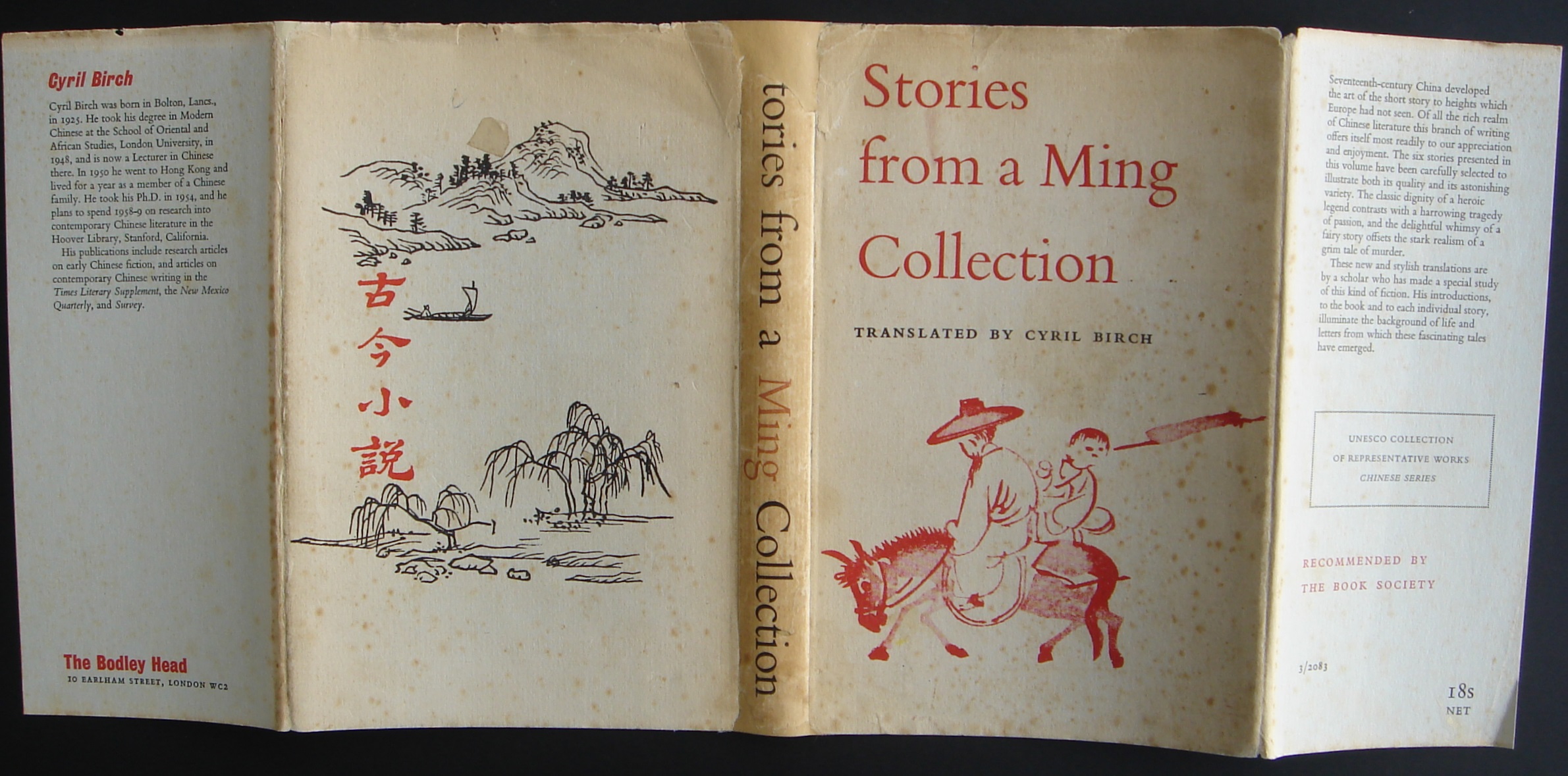
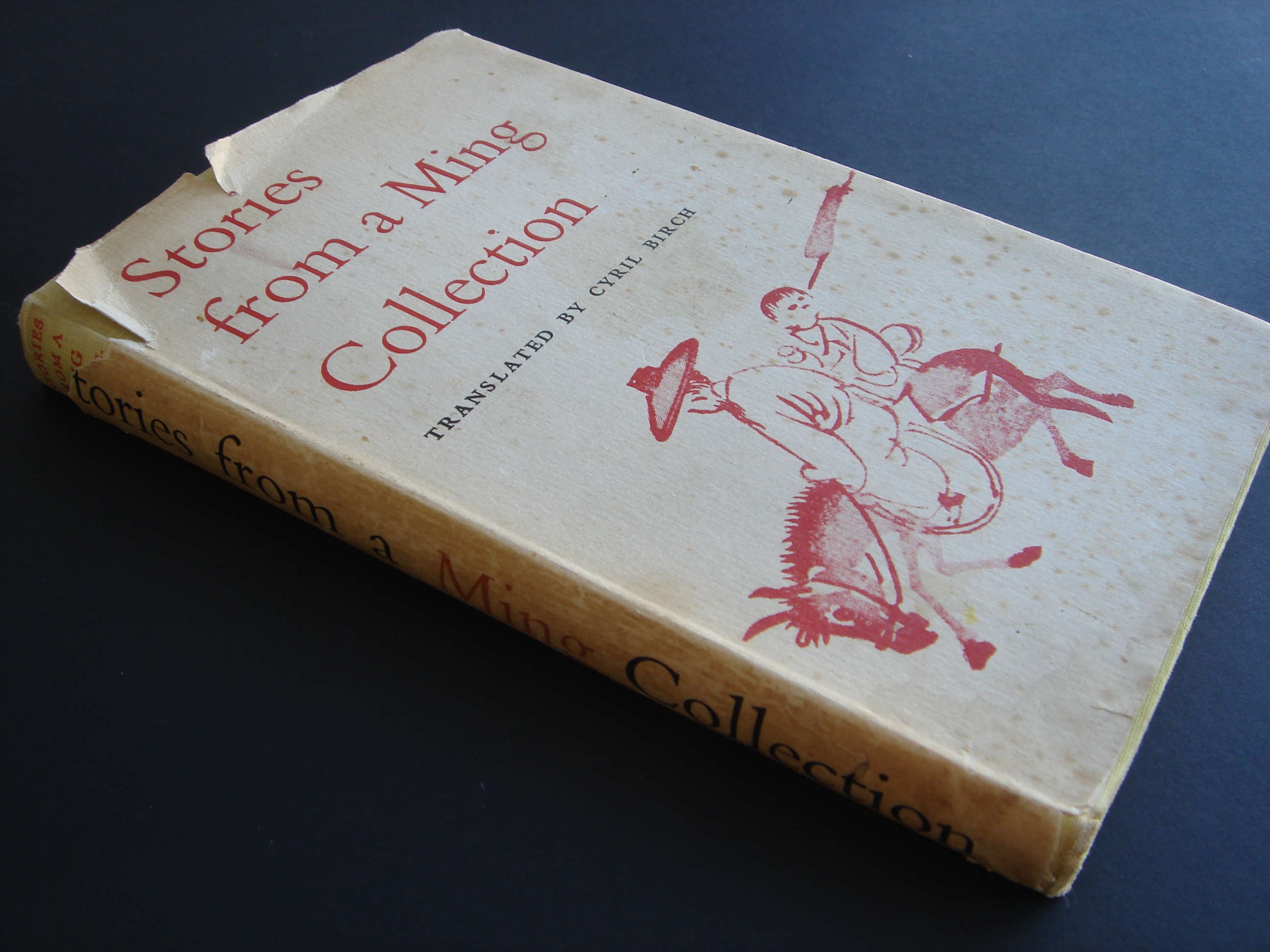
As a timely example, a few days ago I acquired an edition of a book called ‘Stories from the Ming Collection’ which I’m currently reading and really enjoying. As the title suggests, it is a collection of stories from the Chinese Ming dynasty, (1368-1644) which Unesco decided to preserve in the written word in the 1970’s to ensure that these valuable cultural assets are not lost permanently to time.

…And yes, it did need a little conservation!

Before treatment

Before treatment

Before treatment

Before treatment

After treatment

After treatment

After treatment

After treatment

Posted in From the studio, Media articles of interest | Leave a comment

If the shoe fits…

I recently bought myself a copy of a 1942 edition of Joseph Conrad’s, ‘A Conrad Argosy’,  a lovely edition complete with woodcuts by Hans Alexander Mueller. As it’s a large and heavy book, in an ideal world it would be stored lying flat on my bookshelf however, unfortunately I just don’t have the space.

My concern is that storing the book upright is not a safe option as the text block would sag over time, pulling at the spine and probably resulting in a text-block split. The answer? I’ve decided to make a customised book shoe, a brilliant way of supporting book text blocks. Shoes allow a volume to be stored upright whilst supporting the text block from below. They are discreet in appearance, (hence the reason why they are often used in old libraries), economical to make and are easily removable.

During my time at the Bodleian Library in Oxford, book shoes were used extensively in the 15th century Duke Humphrey’s library. If you are interested in finding out more about book shoes or feel they could be an asset to your collection, the Bodleian have available a great article which explains the many advantages of book shoeing and a guide to their construction: https://docs.google.com/viewer?a=v&q=cache:UBklYcVSaB0J:cool.conservation-us.org/iada/ta95_021.pdf+&hl=en&gl=uk&pid=bl&srcid=ADGEESjLy1490UsY2Hr24-Qxwe-F19lV5zkLjnIvX340s_baYSnws1XlTy4HXkogOrtoTd-U3EcxuqDfdEQ9qlPEd4_MozP-g_LwWWDfGBIAV-aCvw_gsCmaCf4PamgiSJV-0gxOG9Ql&sig=AHIEtbQ4b1xiTjHq34gU5CQdoRqn-ayHxw

The US-based NEDCC also have the following excellent resource:

http://www.nedcc.org/resources/leaflets/4Storage_and_Handling/07BookShoe.php

Remember, always use only those materials which you know to be acid and lignin free, particularly as they will be in direct contact with the book. I used acid-free mountboard for mine and it’s proved strong enough, (you could always double up the thickness if necessary). Don’t skimp on details such as rounding the corners and sanding the edges as they are really important for protecting the text block.

If you have any questions, please don’t hesitate to contact me.

Posted in From the studio | Leave a comment