Painting exhibition; Mansion House, Jesmond, Newcastle

I’m going to a John Nicholson and Dunelm Fine Art open evening tomorrow night which will mark the start of their 3-day exhibition at the Mansion House in Jesmond, Newcastle, (Wednesday to Saturday this week).

Looking forward to seeing a great collection of paintings from these major North East dealers hanging in such a beautiful interior, (it’s the Lord Mayor of Newcastle’s official residence).

Posted in Events, talks and activities | Leave a comment

(Un)covered Histories

You just never know what you may find. This can sometimes be true of family documents which undergo conservation.

Today in the studio I removed a modern, browned and acidic backing board from a wedding certificate dated 1863. In contrast to the beautiful engraving and hand-written names on the front of the certificate, the back told a sadder tale. Several stamps from the war office and pension office and a written inscription imply that the wife was later widowed and required her certificate as evidence of marriage to her military husband.

If you’re currently researching your family history, perhaps the answers to some of your questions may lie hidden in your home on inherited engravings or certificates?

Posted in Media articles of interest | Leave a comment

October Newsletter

My latest newsletter – the last one for 2012 – is now available on the page, ‘Newsletters’ or by clicking this link:  October 2012 Newsletter – Zoe Finlay Paper Conservation

I hope you enjoy it and find the article on sellotape very useful. Don’t forget to email me if you’d like a copy of my leaflet, ‘Recommended Alternatives to Sellotape and other Stationary’.

Posted in Media articles of interest | Leave a comment

October newsletter – out soon

I’m currently working away on my October newsletter which is due out on Friday 19th October. As always, just in time to read over your final morning coffee of the week!

I always enjoy writing the newsletters and it makes it even more exciting to know that they are read and enjoyed so much by everyone.

If you would like to be added to the newsletter mailing list, please send me your email address or they are available on this website by going to the ‘Newsletter’ page.

Your details will never be passed onto anyone else.

Posted in Newsletter | Leave a comment

October’s Tynemouth Second Hand and Antiquarian Book Fair – final one of the 2012

Yes, incredibly, we are nearing the end of the year already and the final Tynemouth Second Hand and Antiquarian Book Fair will be held as usual on Sunday 21st October, 10am-4pm on the platform of Tynemouth station.

The October fair is usually bustling and as always, there’s a really relaxed and fun atmosphere. The true bibliophile tends to arrive before 10 to snap up some of the older, more rare books and maps.

Bring along photos of any paper items or book text blocks you are concerned about or just stop and say hello!

Although not yet confirmed, I’m usually on stall number 1, near the stairs. Hope to see you there.

Posted in Book fairs | Leave a comment

Jack Kerouac’s ‘On the Road’ – fascinating video of the scroll

Here is a fascinating video of Jack Kerouac’s continuous manuscript scroll for ‘On The Road’ being given a very rare unrolling by its conservator, Jim Carey.

Jack Kerouac’s scroll rolls into London

The 120-feet long scroll was pieced together by Kerouac so as to avoid having to add separate pieces of paper into his typewriter and potentially interrupting his creative flow.

The scroll is on display at the British Library, London, from now until 27th December 2012.

Posted in Media articles of interest | Leave a comment

Watercolour Painting in the 19th century

North-east Fine Art dealers, John Nicholson and Dunelm Fine Art, recently invited me to submit an article for their new website.

As they have a particularly good collection of watercolour paintings, (in particular, many of the Northumberland coast), I decided that my article would examine how and why watercolour painting proliferated during the 19th century; and the reasons may be more interesting and diverse than you might think.

If you’d like to read the article, please follow the below link and keep checking back for another addition in the future: http://www.johnnicholsonfineart.co.uk/latestnews/

Posted in Events, talks and activities, Paper history | Leave a comment

Buckets of rain…buckets of tears…

‘..got all them buckets coming out of my ears’… as Bob Dylan lamented in his song. It sprang to my mind as I watched the rain falling yet again, (where is it all coming from)?

I sincerely hope that your home is warm and dry but just in case you’ve been unfortunate enough to have a leak or flood, I’ve put together a short document on what to do with your pictures or books if they get wet. I’ve made it brief enough to help at a quick glance in an urgent situation, but feel free  to contact me on 07906 334 002 should you have any questions or concerns.

In addition to the obvious rain, don’t forget that higher levels of humidity can cause condensation on walls and in picture frames so keep checking your precious items regularly.

Caring for Damp Paper & Books

Posted in From the studio | Leave a comment

Lighting the losses

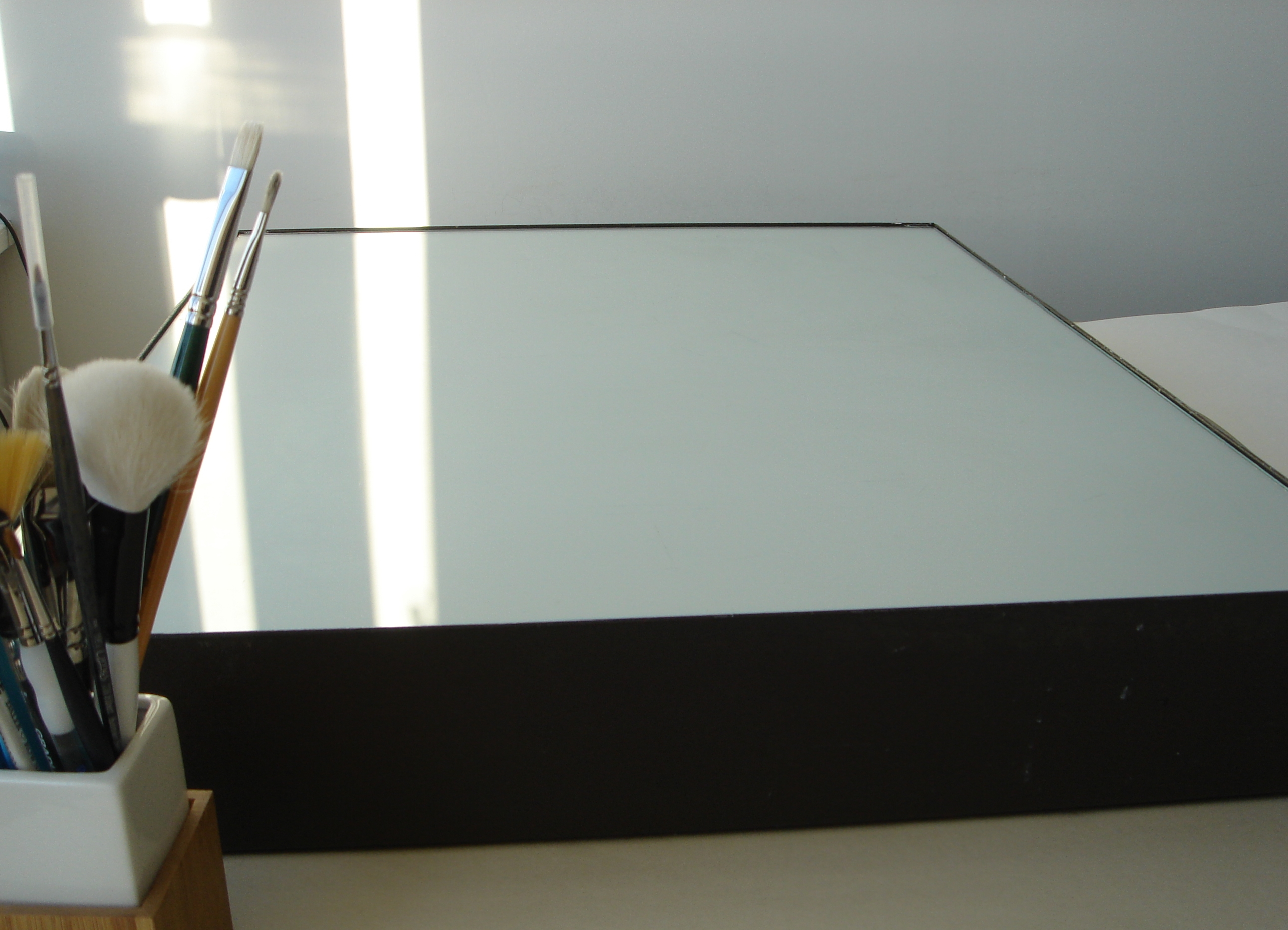
I’ve just upgraded my old light box for a much larger version which is going to be fantastic for carrying out many of my paper repairs.

To be suitable for paper conservation light boxes need to meet several requirements such as having a firm glass surface to work with no flex; wet treatments need to be carried out in safety and daylight flourescent lights must create an even light with no hot spots which can be very damaging to the paper.

Light boxes help every crack and tear in paper to show vividly. As they emphasise the directions of the fibres within a tear, they often help a conservator to make a really accurate and unobtrusive repair.

The giant new light box, (photographed in very rare late afternoon sun)!

Examining a tear in a 19th century theatre playbill using the lightbox

Posted in From the studio | Leave a comment

Victorian wallpaper discovered in old York building

During a recent trip to York, I couldn’t resist popping into ‘Duttons for Buttons’, a tiny haberdashery shop which has been there for many years and which I remember passing regularly as a small child.

I was delighted to find that recent expansion plans had uncovered a hidden 16th century range, an entire mediaeval room complete with exposed beams and struts and to my excitement, a section of Victorian wallpaper which has now been preserved behind Perspex on a stairwell.
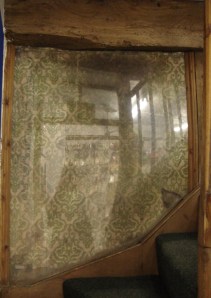
Stairwell paper
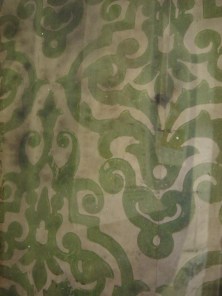
Detail of the pattern

The paper was a typical example of the woodblock printed wall hangings which became popular with fashionable, middle class Victorians.

Predominantly green, the pigment often used to produce this colour in Victorian wallpapers was the highly toxic Emerald Green.

First recorded in 1822, the pigment contained the copper aceto-arsenite compound. As the name implies it contained quantities of arsenic, the fumes of which were released in damp conditions. It is famously reported that this pigment contributed to the death of Napolean, who had his rooms papered with a green wallpaper although no evidence exists to support this theory.

By the Victorian era, papers were frequently pasted directly the plastered walls, (as can be seen in this York example), and this certainly would have increased the papers’ contact with moisture. The proximity of fires, candles and burning oil encouraged dirt and pollutants to stick to the paper and it wasn’t long before a freshly-papered room began to deteriorate in appearance. Areas of dirt are evident on this example and with the large range just feet away, it isn’t surprising.

The staff were very welcoming to people admiring the buildings’ interior so pop into 32, Coppergate, York next time you are there for a tourist-free treat. Information sheets on the history of the building are available on the ground floor.
Posted in Paper history | Leave a comment